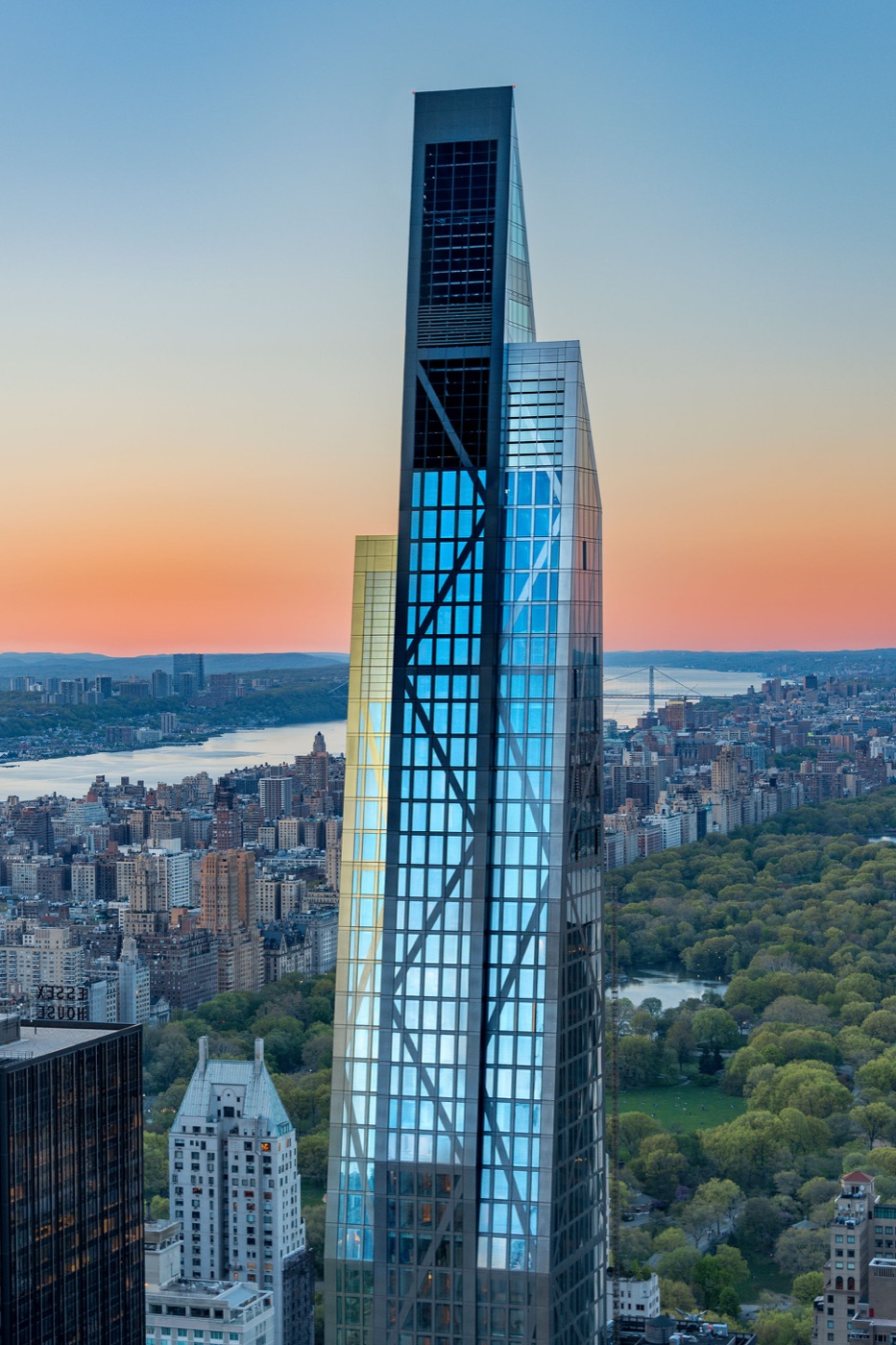
MANHATTAN REAL ESTATE

Manhattan represents the pinnacle of global real estate investment. From iconic prewar cooperatives on Fifth Avenue to cutting-edge condominiums designed by Pritzker Prize–winning architects, Manhattan offers unparalleled diversity and enduring value. Since 2005, Manhattan Miami Real Estate has guided international buyers through every step of purchasing luxury property in New York City.


Manhattan Market Snapshot — Q3 2025

Metric

Q3 2025

Median Sale Price

$1,225,000 (+7% YoY)

Median Condo Price

$1,650,000 (+2.2% YoY)

Median Co-op Price

$870,000 (+3.6% YoY)

Price Per Sq Ft (Condo)

$1,998 (+5% YoY)

Closed Sales

3,158 (+13.4% YoY)

Cash Transactions

65.3% of all sales

New Development Sales

+71% YoY (578 closings)

Luxury Threshold (Top 10%)

$4,000,000+

Source: Douglas Elliman / Miller Samuel Q3 2025 Report


Browse by Property Type

  • Condominiums — Fee-simple ownership with flexibility to rent, no board approval for most transactions. Ideal for investors and international buyers. [/manhattan-apartments-for-sale]
  • Co-ops — Traditional Manhattan ownership with board approval, often lower prices and maintenance costs. [/manhattan/coops-for-sale-in-manhattan]
  • Townhouses — Single-family homes offering privacy, outdoor space, and architectural distinction. [/manhattan/nyc-townhouses-for-sale]
  • Penthouses — Top-floor residences with terraces, premium finishes, and panoramic views. [/manhattan/top-50-nyc-penthouses-for-sale]
  • New Developments — Ground-up construction with modern amenities, tax abatements, and sponsor financing. [/new-developments-nyc]
  • Prewar Classics — Architecturally significant buildings from the 1920s–1940s featuring high ceilings, original details, and prime locations.

Explore Manhattan Neighborhoods

  • Upper East Side — Museum Mile, elite prewar co-ops, and boutique shopping along Madison Avenue.
  • Upper West Side — Cultural institutions, Central Park access, and family-friendly brownstone blocks.
  • Tribeca — Converted lofts, celebrity residents, and Manhattan's most expensive zip codes.
  • SoHo & NoHo — Cast-iron architecture, art galleries, and flagship retail.
  • Chelsea — The High Line, contemporary galleries, and new luxury developments.
  • West Village & Greenwich Village — Tree-lined streets, historic townhouses, and bohemian character.
  • Midtown East & Billionaires' Row — Supertall towers, Central Park views, and proximity to major corporations.
  • Financial District — Historic conversions, waterfront access, and tax-abated new construction.
  • Hudson Yards — Manhattan's newest neighborhood with Related Companies' mixed-use development.
  • Harlem — Renaissance architecture, emerging dining scene, and significant value relative to downtown.


An effective Manhattan property search with the right broker will deliver the right results.

Strong economic factors and the array of property types in NYC draw buyers not only from New York and the United States, but from all over the world. So far, we have discussed the "Why" of investing in Manhattan real estate. Now let us look at the "How."

NEW YORK CITY IS THE “WORLD’S LEADING CITY”

 NYC's impact on the world is immense. It is, indeed, the cultural, financial and media capital of the world, and is also a center for research, technical development, education, entertainment, sports, and politics. 

New York City consistently has topped the Knight Frank Wealth Report jostling with London for the #1 spot. The Wealth Report is a guide to the world of international prime residential property and offers a perspective on the key luxury property markets around the globe. In their recent survey, the Wealth Report ranks New York City as:

#1 

Current Wealth

#2

Investment

#2 

Connectivity

#1

Future Wealth


WHY INVEST IN MANHATTAN REAL ESTATE?

With more than 8.2 million people, New York City is the most populous city in the United States. The “Big Apple” is one of the world’s leading business, financial and cultural centers and its influence in politics, education, entertainment, media, fashion and the arts all contribute to its status as one of the major global cities. The city boasts a high quality of life, extremely high household incomes, and vast opportunities for cultural and entertainment activities.

Current Manhattan Market Analyis: 

"Why Now is the Right Time to Buy Manhattan Real Estate"


TOP CONDOS IN MANHATTAN

NYC ECONOMIC INDICATORS SUPPORT A STRONG REAL ESTATE MARKET

The UBS Global Real Estate Bubble Report scores NYC 0.2, which is a "fairly valued" market. This is a better score than, for example, Vancouver, Sydney, and London. Manhattan's house price dynamics were recorded as much stronger than in the two previous years. This strength was put down to global investor activity and new luxury developments coming on the market. 

These indicators result from our strong economy and venture capital investment. This year, private sector jobs have increased by 2% and seasonally adjusted unemployment rates fell to 4.2% (3.9% in Manhattan) putting employed residents at an all time high. 

The growth is mainly in eight business sectors including education, health, professional and business. This growth spectrum shows greater diversification than in previous years; another positive sign that NYC's economic strength should continue. The Metro Area's employment rate is the highest ever recorded and shows the longest job expansion since the mid-1940's.


MANHATTAN LUXURY PROPERTIES ARE A BARGAIN COMPARED WITH OTHER WORLD CITIES

Despite the impressive economic results, Manhattan's luxury properties are well-priced. Knight Frank compared the five top luxury real estate markets with New York City. The average price for comparable luxury properties shows the following. The first dollar amount is price per square foot, and the second is per square meter:

MANHATTAN REPORT

HERE IS WHERE THE RANKINGS CAME OUT:

City

Per Square Meter

Per Square Foot

#1) Monaco

#2) London

#5) Paris

#8) Tokyo

#9) Hong Kong

#9) New York

$65,600

$56,300

$40,500

$28,300

$27,300

$22,600


$6,000

$5,236

$3,767

$2,632

$2,539

$2,102


 City Per Square Meter Per Square Foot
#1) Monaco $65,600 $6,000
#2) London $56,300 $5,236
#5) Paris $40,500 $3,767
#8) Tokyo $28,300 $2,632
#9) Hong Kong $27,300 $2,539
#10) Singapore $27,100 $2,520
#14) Geneva $23,700 $2,204
#16) Moscow $22,800 $2,120
#17) New York $22,600 $2,102
#22) Rome $18,200 $1,693
#23) Shanghai $17,700 $1,646
#27) Beijing $16,000 $1,488
#34) Sydney $11,500 $1,070
#36) Madrid $10,500 $ 977

Types of Manhattan Property to Consider

The two primary decisions buyers must make are property location and property type. We have explored why New York City, and Manhattan, are an ideal location so, now let us look at property types. Manhattan has four main types, townhouses, condominiums, cooperatives, and condops (which are a blend of condo and co-op. 

  • Townhouse:  A New York townhouse is a multi-story, single family home. The owner holds title deed and is solely responsible for it. The owner has no restrictions imposed by an association. They are investor-friendly properties.

TOWNHOUSES FOR SALE


  • Condominium or condo: a Manhattan condo owner holds title by deed of an apartment and takes joint ownership with all other owners of the common areas. A condo board manages the property and owners pay a monthly fee to cover common expenses. There are some restrictions imposed by the board, financing is accessible, and they are investor-friendly.

NYC CONDOS FOR SALE


  • Co-operative or co-op: A coop building is owned by a corporation. The corporation sells stock to shareholders in exchange for a long-term proprietary lease. Lessees pay a monthly fee to cover all costs. Co-ops have many restrictions such as on subleasing. They are not investor-friendly and usually prohibit foreign ownership. They represent about 70% of the market.

NYC COOPS FOR SALE


  • Condop: This is a co-op with condo rules. They are investor-friendly. 

Whether to buy a co op vs condo is a question we always hear. You can find more detailed information on the pros and cons co ops vs condos here. 


NYC Property Buyers Should Use Their Own Buyer Broker

Every state in the US and every country in the world have different laws governing the purchase and sale of real estate. The two parties to a real estate transaction are the seller and the buyer. The seller will use a dedicated real estate selling broker or agent to represent them throughout the transaction. This selling agent or broker will work solely in the seller’s interest - getting the highest price and best terms for the seller.  Accordingly, buyers should have their own dedicated representative!

In the US, all broker commissions are paid by the sellers. Then, they are split between the seller's agent and the cooperating buyer's agent. Accordingly, hiring a buyer's agent is free of charge to the buyer. The buyer's agent has a vested interest in the buyer, the buyer's goal, and in getting the best outcome for the buyer.

In contrast, the seller's agent's goal is to get the highest possible price and the best possible terms for the seller. The buyer agent's role is to work for the buyer and to get them the right property, at the right price, on the most attractive terms and with least amount of hassle. The buyer, therefore, can rest assured that they have on their team a specialist who knows:

  • Everything about the Manhattan real estate market and individual neighborhoods.
  • Every type of property that is currently on the market.
  • Properties due to come on the market.
  • Background details on each development, not just individual apartments and townhouses.
  • The homeowner associations which govern the development.

The buyer's agent is crucial to achieving a totally successful purchase – of the right property, on the right terms, and with minimum hassle or any long-term regret. Buyers who are financing their purchase will want to have their mortgage application pre-approved as far in advance as possible. An offer to purchase supported by a mortgage commitment from a respected lender adds a lot of weight to the offer, especially in a city that has a lot of cash deals.

If the purchase is for a condo or co-op, the buyer must also be approved by the board. Boards can deny an application for different reasons. An experienced buyer agent will know about individual condo and coop boards. They will be able to advise their buyers on whether it is worth pursuing a particular property or to avoid the likelihood of being rejected by the board. For example, condo boards have "right of first refusal". They can decide to buy the apartment themselves from the seller instead of accepting a new buyer into the building.  In contrast, coop board can flat out reject buyers. Generally, coops are for primary homeowners. Therefore, if you are a foreign buyer or investor interested in renting out their new property, you are very likely to be rejected the coop board.

The real estate broker helping the buyer will also help to decide on which attorney to hire to take the transaction through to successful completion. They also have an array of connections that can help you get a mortgage.

"9 Tips for Buying Luxury Real Estate in New York"


Additional Details for Foreign Buyers

The United States real estate market is different from other countries in several ways. Firstly, the US encourages overseas buyers. The market is transparent; every licensed real estate agent New York acting as a buyer's agent can search the entire market, regardless of which company is marketing a property. Few other countries have such a transparent process.

The US does not, unlike some other countries, charge extra stamp duties to foreign buyers. London, Hong Kong, Vancouver, Sydney, and many other cities, charge foreign investors and extra stamp duty from 7% to 30% of purchase price. These extra stamp duties are extraordinarily high. In the US, there is no extra stamp duty for foreigners.  

Financing is also readily available from household-name banks to foreign investors and at very attractive rates. US mortgage rates are currently at historic lows which adds to the attractiveness of Manhattan real estate.

When a foreign investor sells their real estate, they do become subject to the Foreign Investor Real Estate Transaction Act (FIRPTA.) This is simply a withholding requirement and not a separate tax. Essentially, this Act exists to protect the US Government from a foreign investor who is not meeting their income or capital gains tax obligations. Ten percent (10%) of the selling price is withheld at closing until all tax liabilities are met is returned once the final tax return is submitted by the seller.

"Can Foreigners Buy Property In the USA?"

"The Foreign Buyer's Checklist For Purchasing Manhattan Real Estate"


LET US HELP YOU FIND THE PERFECT HOME


START YOUR CUSTOM SEARCHVIEW PROPERTIES

Which Neighborhood is Right for Me?

Cost, investment appreciation, rental income, and lifestyle are all primary factors when deciding on a neighborhood. The Manhattan market offers upscale, luxury properties across many neighborhoods. The top 10% of the market is where you will find New York luxury condos. They can be found in just about every Manhattan neighborhood. We discuss each neighborhood in detail in other areas of our website. But here is a whistle stop tour of what many people think are some of the most popular districts:

  • Financial District (FiDi) is where the first Dutch settlers landed. It was primarily a commercial area, but it is now one of the most sought-after residential areas of Lower Manhattan.  It boasts chic boutiques, upscale food halls, and power-lunch restaurants among its cobblestone streets.
  • Chelsea has always been a favorite among New Yorkers.
  • Midtown West is close to Broadway, so offers a lively nightlife and a short commute to most of the island.
  • Flatiron Area is close to Broadway and 5th Avenue, so has great restaurants, impressive shopping, and new fitness clubs.
  • Greenwich Village has a unique charm of its own. It has a reputation as a special community with a creative flair.
  • NoHo (North of Houston Street) has very upscale residences and is between Greenwich Village and East Village. It is very popular with celebrities.
  • SoHo (South of Houston Street) is thought to be the trendiest district in Manhattan. It boasts very expensive residences with many upscale boutiques and fine dining restaurants. Check out apartments for sale in SoHo & NoLiTa.
  • Gramercy's architecture dates back to the 19th Century and has a distinctive Italian and Greek feel to it. The very exclusive Gramercy Pak is available only to residents who pay an annual access fee. So, if exclusivity is for you then so is this beautiful district.
  • Murray Hill has developed into a young, post-graduate residential area. It has a thriving nightlife and lots of stores and restaurants.
  • Upper East Side
  • Upper West Side, Lincoln Center & Columbus Circle
  • Central Park & Billionaire's Row
  • Brooklyn real estate has been thriving, with Williamsburg leading the pack. The median price of homes for sale throughout Brooklyn is a fraction of the price in Manhattan.

Nolita

Nolita is a small but jam-packed Manhattan neighborhood filled with boutiques, restaurants, and galleries. Nolita stands for “North of Little Italy,” and the neighborhood was historically inhabited by Italian immigrants. Today, many elderly descendants of these immigrants still live in the neighborhood. They’re joined by young professionals and families who are attracted by how quiet the neighborhood is. Nolita, which is located East of SoHo, West of Lower East Side, South of NoHo, and north of Little Italy, is a beautiful enclave in Lower Manhattan that has a true community feel.

Lower East Side

The vibrant Lower East Side neighborhood was once a hub for New York City’s newest residents. Many Europeans immigrated here in the 19th and early 20th centuries and set up shops and restaurants. Today, many of the businesses started by the Lower East Side’s first residents are still around, and they often sit next to modern, chic boutiques or tiny hole-in-the-wall bars. As with many lower Manhattan neighborhoods, these contrasts give the Lower East Side its unique character.

NOHO

NoHo, which stands for “North of Houston,” is a small but busy neighborhood that has stunning architecture, trendy shops, and chic restaurants right North of SoHo. In the late 1800s, NoHo was mostly a manufacturing district. But by the 1950s, most of the manufacturers had moved to other parts of the city, and they began renting their spaces to artists and theater groups. Today, many artists live in NoHo’s large lofts, and there are still many performing art spaces in the neighborhood. NoHo may only be six blocks wide, but every one of those blocks is filled with unique attractions that make this neighborhood one of the most sought after in Downtown Manhattan.

Meatpacking District

The trendy Meatpacking District is located on Manhattan’s far westside, next to Chelsea. Before the 1990s, the Meatpacking District was mostly home to the factories and meatpacking plants that gave the neighborhood its name. In the 1990s, though, boutiques that catered to young professionals moved in, and soon hip young residents followed. Now, when you walk down the neighborhood’s cobblestone streets, you’ll see plenty of co-ops, townhouses, and newly built high-rises. This chic NYC neighborhood is one of the most sought after in the city.

Chinatown

The bustling Chinatown neighborhood is located in Lower Manhattan, North of the Financial District, and it’s the largest Chinatown in the United States. Immigrants from China started moving into the area as early as the mid-1800s. In the 1900s, a new influx of immigrants from Hong Kong and the Fujian Province of China moved in, firmly establishing the neighborhood’s identity. Today, Chinatown is a vibrant, diverse neighborhood full of busy streets with shops selling items imported from China and restaurants that serve some of the freshest and most authentic cuisine around.

Relocating to Manhattan

Relocating to anywhere is both exciting and complex. With our help, our clients research potential areas, explore them in person, and choose both the right neighborhood and the right property for them. We have contacts to assist with all the practical steps: legal issues, preparing the property for their arrival, shipping their personal items, shopping for new furniture, and moving in when relocating to New York City. Some clients feel that it is best to rent in New York before buying. However, others, who know the city well, come prepared to buy. Either way, we are here to help you sift through all the luxury apartments NYC.


How We Can Help

We have been serving buyers and sellers for more than 15 years. We are experts in all aspects of New York Real Estate and Miami Real Estate from an initial property search and exploring districts through contract negotiation, closing, and property management. Our clients are both local as well as coming from all over the world.

Case Studies of Homebuyers, Sellers  & NYC Real Estate Investors

START YOUR SEARCH NOW


SCHEDULE AN IN-PERSON
MEETING WITH OUR TEAM

SCHEDULE A MEETING

Do I need a Realtor?