Select City
Selling or Buying?
Property Type
Your Budget?
Real Estate Agents
Manhattan
Miami

-2.png?width=500&height=205&name=MIAMI%20HOME%20SEARCH%20(2)-2.png "MIAMI HOME SEARCH (2)-2")


Luxury Condos & Market Analysis — December 2025
Miami has fundamentally changed. The pandemic-era migration of wealth from New York, California, and Latin America wasn't a temporary spike—it was a permanent shift. Hedge funds, family offices, and tech companies have relocated. The tax advantages (no state income tax, no estate tax) are real and substantial. And Miami has made its foray into the ultra-luxury segment—a market it never really had before. Buildings like Four Seasons, St. Regis, and the automotive brands (Porsche, Aston Martin, Bentley) have brought $3,000-$5,000/SF product to a city that topped out at $1,500/SF a decade ago.
But here's what most buyers don't realize: the current wave of new development is the last of the affordable inventory. Buildings launching now were financed and constructed before tariffs of 20-50% hit steel, aluminum, concrete, and lumber. The next cycle of projects will cost 20-30% more to build—and those costs will be passed on to buyers.
It's also a tale of two markets: buildings less than 30 years old vs. buildings greater than 30 years old. Florida's new condo laws require milestone structural inspections and fully funded reserves for older buildings—which means potential special assessments. Newer construction avoids these issues entirely. The age of the building matters more now than ever.
My Take: If you're considering Miami, buy now. Current inventory is a bargain compared to what's coming. The buildings on the market today were built with pre-tariff costs. Once they sell out, replacement cost pricing takes over.
📍 Looking for specific buildings? See our complete Luxury Apartments Miami guide — 22+ hand-picked condos with floor plans, pricing, and my personal recommendations.
|
Metric |
December 2025 |
|---|---|
|
Median Condo Price (Miami Beach) |
$620K |
|
Median Condo Price (Brickell) |
$580K |
|
Luxury Condo Price Per SF |
$1,200–$3,500+ |
|
Ultra-Luxury (Branded Residences) |
$2,000–$5,000+/SF |
|
Average Days on Market |
95 days |
Miami's neighborhoods each have distinct characters, price points, and buyer profiles. Here's my honest assessment.
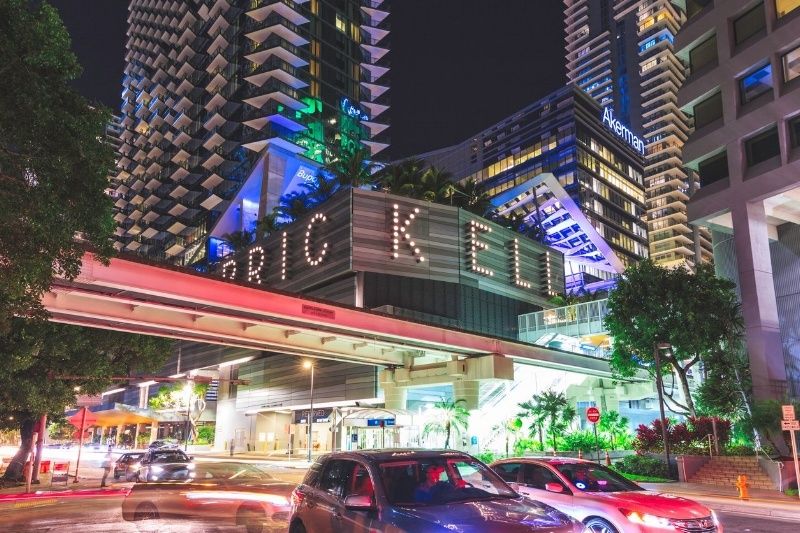
Brickell is Miami's financial district—high-rises, young professionals, walkable urban living. The neighborhood has matured significantly with Brickell City Centre anchoring retail and dining. New developments like St. Regis Brickell and Cipriani Brickell are bringing ultra-luxury to an area that was primarily mid-market condos.
Price range: $600–$1,500/SF. My verdict: Great entry point for Miami. Strong rental demand if you need flexibility.
Edgewater sits between downtown and the Design District, with bay views and easy access to both. It's less dense than Brickell, more residential in feel. New developments are bringing better product to the area, and proximity to Wynwood and the Design District adds appeal.
Price range: $700–$1,200/SF. My verdict: Undervalued compared to Brickell. Good upside as the Design District continues to grow.
Downtown has transformed from a 9-to-5 business district into a genuine neighborhood. Aston Martin Residences (66 stories) has redefined what's possible here. The Kaseya Center brings events and energy. New transit connections are improving accessibility.
Price range: $600–$2,000/SF. My verdict: Aston Martin Residences elevated the entire neighborhood. More upside ahead.
This might sound like a sales pitch, but it's economics. Every new development currently selling was built with pre-tariff material costs. With tariffs of 20-50% now hitting steel, aluminum, concrete, and lumber, the next generation of buildings will cost 20-30% more to construct—and those costs will be passed on to buyers. The buildings on the market today are the last of the "cheap" inventory. Once they sell out, replacement cost pricing takes over.
My verdict: Buy now. Current inventory is a bargain compared to what's coming next.
Fisher Island is accessible only by ferry—no bridge, no tourists, complete privacy. It has the highest per-capita income of any zip code in America. The island has its own school, golf course, marina, and beach club. Six Fisher Island, the newest development, is bringing contemporary product to an island that needed it.
Price range: $2,000–$4,500/SF. My verdict: The most exclusive address in Miami. If privacy is paramount, this is it.
Sunny Isles has become Miami's "Billionaire's Row"—a concentration of ultra-luxury branded residences unlike anywhere else in the US. The Porsche Design Tower (with car elevators to your unit), Ritz-Carlton Residences, Turnberry Ocean Club, and the upcoming Bentley Residences define the skyline. Direct beach access, no property tax for non-residents, and proximity to Bal Harbour shopping.
Price range: $1,500–$3,500/SF. My verdict: The concentration of branded residences here is unmatched. If you want a trophy condo with hotel services, this is the place.
South of Fifth is the most exclusive part of Miami Beach—a quiet residential enclave at the southern tip of the island with Biscayne Bay on one side and the Atlantic on the other. Continuum, Apogee, Glass are landmark buildings. It's walkable to South Beach nightlife but insulated from the chaos.
Price range: $1,800–$4,000/SF. My verdict: Best of both worlds—beach lifestyle with neighborhood feel. Limited new inventory keeps values strong.
Surfside is a small, quiet beachfront town between Miami Beach and Bal Harbour. The Four Seasons Surf Club redefined the area—bringing Five-star service to a low-key neighborhood. It's walkable, family-oriented, and has direct beach access without the density of Sunny Isles or the scene of South Beach.
Price range: $1,500–$3,000/SF. My verdict: Four Seasons Surf Club is one of the best branded residences in Miami. Quiet sophistication.
Bal Harbour is synonymous with luxury—home to the iconic Bal Harbour Shops, one of the highest-grossing malls per square foot in the US. The beachfront village sits between Surfside and Sunny Isles with a distinct old-money feel. Oceana Bal Harbour and The Ritz-Carlton Residences Bal Harbour set the standard. Limited inventory because there's simply no room to build—the village is fully developed.
Price range: $1,800–$3,500/SF. My verdict: Ultra-exclusive with nowhere to expand. Bal Harbour Shops alone makes this a destination.
Coconut Grove is Miami's original neighborhood—a bohemian enclave with a peaceful marina, tree-lined streets, and a quaint village feel. The new Four Seasons Coconut Grove has elevated the area with ultra-luxury residences. Inventory is limited because the neighborhood is largely built out and fiercely protected by longtime residents. It's also just minutes from Brickell, making it ideal for those who want tranquility without sacrificing access to the financial district.
Price range: $1,200–$2,500/SF. My verdict: Rare inventory in a neighborhood that resists change. Four Seasons brought world-class product to a boho enclave on the water.
Miami has more branded residences than any city in the Western Hemisphere. These hotel-branded condominiums offer Five-star services, luxury finishes, and the cachet of globally recognized names. They also tend to hold value better than non-branded buildings.
|
Property |
Location |
Price/SF |
|---|---|---|
|
Four Seasons Surf Club |
Surfside |
$2,200–$3,500 |
|
Four Seasons Coconut Grove |
Coconut Grove |
$1,800–$2,500 |
|
St. Regis Sunny Isles |
Sunny Isles Beach |
$1,800–$2,800 |
|
St. Regis Brickell |
Brickell |
$1,600–$2,400 |
|
Ritz-Carlton Sunny Isles |
Sunny Isles Beach |
$1,500–$2,500 |
|
Ritz-Carlton Bal Harbour |
Bal Harbour |
$2,000–$3,200 |
|
Six Fisher Island |
Fisher Island |
$3,000–$4,500 |
|
Aston Martin Residences |
Downtown Miami |
$1,400–$2,200 |
|
Porsche Design Tower |
Sunny Isles Beach |
$1,600–$2,400 |
|
Cipriani Brickell |
Brickell |
$1,800–$2,600 |
|
888 Brickell (Dolce & Gabbana) |
Brickell |
$1,600–$2,200 (pre-con) |
|
Ritz-Carlton Miami Beach |
Mid-Beach |
$1,800–$3,000 |
|
Mandarin Oriental Brickell Key |
Brickell Key |
$1,600–$2,400 (pre-con) |
|
The Raleigh |
Mid-Beach |
$2,500–$4,000 (pre-con) |
|
St. Regis Bahia Mar |
Ft. Lauderdale |
$1,400–$2,200 (pre-con) |
|
Bentley Residences |
Sunny Isles Beach |
$2,500–$3,500 (pre-con) |
→ Full building details: See floor plans, amenities, and my expert picks in our Luxury Apartments Miami guide.
My Take: Branded residences command a premium, but they deliver real value: professional management, hotel services, and stronger resale. For international buyers who won't use the property full-time, the rental programs and property management make ownership seamless.
Over 70% of my clients are international buyers. Miami is the most foreign-buyer-friendly market in the United States—and it's not close.
Best buildings for international buyers: Four Seasons Surf Club, Four Seasons Coconut Grove, St. Regis (Sunny Isles, Brickell, and Bahia Mar), Ritz-Carlton Miami Beach, Mandarin Oriental Brickell Key, Cipriani, 888 Brickell (Dolce & Gabbana), and Aston Martin Residences. These buildings have rental programs, professional management, and experience handling remote owners.
Beyond the purchase price, Miami condos have ongoing costs. Understanding these is critical to budgeting—especially for international buyers managing properties remotely.
My Take: Newer buildings (under 20 years) with strong reserves are your safest bet. The carrying cost difference between a well-run new building and an older building facing assessments can be enormous. I always review financials before recommending a building to clients.
Miami's process is more straightforward than New York. No board approvals, no invasive financial reviews, no co-op politics.
|
Step |
Timeline & Details |
|---|---|
|
1. Search |
1-4 weeks. Define requirements, tour properties, identify targets. |
|
2. Offer |
Submit offer with proof of funds or pre-approval. Negotiate terms. |
|
3. Contract |
Sign purchase agreement. Deposit typically 10% (held in escrow). |
|
4. Inspection |
15-day inspection period (negotiable). Review condo docs, assess unit condition. |
|
5. Financing |
Finalize mortgage if applicable. Appraisal, underwriting, commitment. |
|
6. Closing |
30-45 days from contract (cash), 45-60 days (financed). Title transfer, keys. |
Rule of Thumb: Budget 2-3% of purchase price for closing costs (cash), 3-4% (financed). Much lower than New York.
Post-Surfside, Florida enacted significant condo reform. Buyers need to understand these changes—they affect both carrying costs and building quality.
Florida condo insurance costs have increased significantly since 2021. Several insurers have left the market. This is a real cost that buyers must budget for.
My Take: Newer buildings (post-2000) with concrete construction generally have lower insurance costs. I always review a building's insurance situation before recommending it to clients.
Florida SB 4D (passed after Surfside) requires:
Silver lining: These laws make Miami condos safer long-term. Well-capitalized buildings with strong reserves are now clearly differentiated from underfunded ones. Quality buildings will hold value better.
Many of my clients are New Yorkers buying in Miami—either relocating or purchasing a second home. Here's how the markets compare:
|
Factor |
Miami |
New York |
|---|---|---|
|
State Income Tax |
0% |
10.9% |
|
City Income Tax |
0% |
3.88% |
|
Estate Tax |
None |
Up to 16% |
|
Luxury Condo $/SF |
$1,200–$3,500 |
$1,800–$4,500 |
|
Closing Costs |
2-3% |
4-6% |
|
Board Approval |
None |
Co-ops: Invasive |
|
Time to Close |
30-45 days |
60-120 days |
|
Rental Restrictions |
Minimal in most condos |
Co-ops: Strict limits |
|
Foreign Buyers |
Welcome |
Co-ops: Often restricted |
The Math: A high earner making $1M/year saves ~$150,000 annually in state and city income taxes by establishing Florida residency. Over 10 years, that's $1.5M+ in tax savings—enough to pay for a significant portion of a Miami condo. This is why wealth migration to Miami isn't slowing down.
California residents are increasingly looking at Miami as an alternative—same sunshine, beaches, and lifestyle, but dramatically different tax treatment.
|
Factor |
Miami |
Los Angeles |
|---|---|---|
|
State Income Tax |
0% |
13.3% |
|
Capital Gains Tax |
0% state |
13.3% |
|
Estate Tax |
None |
None (but federal applies) |
|
Luxury Condo $/SF |
$1,200–$3,500 |
$1,500–$4,000 |
|
Waterfront Access |
Abundant |
Limited high-rise options |
|
Branded Residences |
20+ options |
Limited |
|
International Flights |
Latin America, Europe hub |
Asia-Pacific hub |
The Math: A California resident with $2M in annual income (salary + capital gains) saves ~$250,000+ annually by establishing Florida residency. Founders selling a company face state capital gains tax of 13.3% in California vs. 0% in Florida—on a $50M exit, that's $6.65M in savings. This is why tech founders are relocating.
Important: Establishing Florida residency requires more than buying property. You need to actually live here, change your driver's license, register to vote, and meet other domicile requirements. Consult a tax attorney before making the move.
Yes. There are no restrictions on foreign ownership of Miami real estate. No visa or residency required. Miami is the most foreign-buyer-friendly market in the US. Financing is available through select international lenders with 30-40% down.
Budget 2-3% for cash purchases, 3-4% if financing. This includes title insurance (~0.5%), documentary stamps (0.7%), title search, and lender fees if applicable. Significantly lower than New York's 4-6%.
Brickell offers strong rental demand and liquidity. Edgewater is undervalued with upside. For long-term appreciation, waterfront properties in Sunny Isles, Surfside, and Fisher Island have historically held value best. Branded residences tend to outperform non-branded buildings.
Expect $0.80-$2.00+ per square foot monthly. Luxury buildings with extensive amenities (pools, gyms, concierge, valet) are at the higher end. A 2,000 SF condo might have HOA fees of $1,600-$4,000/month depending on the building and services included.
Building insurance is covered by HOA fees. You'll need an HO-6 policy for your unit: budget $2,000-$5,000+ annually. Flood insurance (required if financing) adds $500-$3,000+ annually. Newer concrete construction typically has lower premiums.
Post-Surfside, Florida requires milestone structural inspections for buildings 3+ stories at 30 years (25 if coastal), then every 10 years. Associations must fund reserves for structural components—no more waiving reserves. This makes older buildings potentially subject to special assessments but improves safety long-term.
Most Miami condos allow rentals with minimal restrictions. Some buildings limit short-term rentals (Airbnb-style) but allow annual leases. Branded residences often have rental programs that handle everything for absentee owners. Always verify the specific building's rules before purchasing.
30-45 days for cash purchases, 45-60 days if financing. No board approval process like New York co-ops. The timeline includes inspection period (typically 15 days), title search, and closing preparation. Much faster than New York's 60-120 day process.
Different markets for different goals. Miami offers: no state income tax, lower closing costs, easier buying process, no board approvals, and better rental flexibility. New York offers: deeper market liquidity, stronger long-term appreciation history, and global brand recognition. Many investors own in both markets.
I've been selling Miami real estate since 2005. Over 70% of my clients are international buyers—from Brazil, Europe, Asia, and the Middle East. I understand the unique challenges: remote transactions, financing for foreign nationals, FIRPTA planning, and finding the right building for owners who won't be there full-time.
Buyer representation is free—sellers pay the commission.
Anthony Guerriero
Licensed Real Estate Broker
Manhattan Miami Real Estate LLC
Licensed in NY, FL
aguerriero@manhattanmiami.com
🏢 Building Directory: For detailed building profiles, floor plans, and my personal recommendations, see Best Luxury Condos in Miami 2025 — 22+ hand-picked properties with expert picks.
Last Updated: December 2025






City
Per Square Meter
Per Square Foot
#1) Monaco
#2) London
#5) Paris
#8) Tokyo
#9) Hong Kong
#10) Singapore
#14) Geneva
#16) Moscow
#17) New York
#22) Rome
#23) Shanghai
#27) Beijing
#34) Sydney
#36) Madrid
$65,600
$56,300
$40,500
$28,300
$27,300
$27,100
$23,700
$22,800
$22,600
$18,200
$17,700
$16,000
$11,500
$10,500
$6,000
$5,236
$3,767
$2,632
$2,539
$2,520
$2,204
$2,120
$2,102
$1,693
$1,646
$1,488
$1,070
$977
| City | Per Square Meter | Per Square Foot |
|---|---|---|
| #1) Monaco | $65,600 | $6,000 |
| #2) London | $56,300 | $5,236 |
| #5) Paris | $40,500 | $3,767 |
| #8) Tokyo | $28,300 | $2,632 |
| #9) Hong Kong | $27,300 | $2,539 |
| #10) Singapore | $27,100 | $2,520 |
| #14) Geneva | $23,700 | $2,204 |
| #16) Moscow | $22,800 | $2,120 |
| #17) New York | $22,600 | $2,102 |
| #22) Rome | $18,200 | $1,693 |
| #23) Shanghai | $17,700 | $1,646 |
| #27) Beijing | $16,000 | $1,488 |
| #34) Sydney | $11,500 | $1,070 |
| #36) Madrid | $10,500 | $ 977 |


MANHATTAN OFFICE
157 Columbus Avenue, 4th Fl
New York, NY 10023
+1-646-376-8752
MIAMI OFFICE
1688 Meridian Avenue, Suite 700
Miami Beach, FL 33139
+1-305-296-8885







START YOUR SEARCH NOW